
Microcurrent Facial: How It Works, Who It’s For, and What Results to Expect
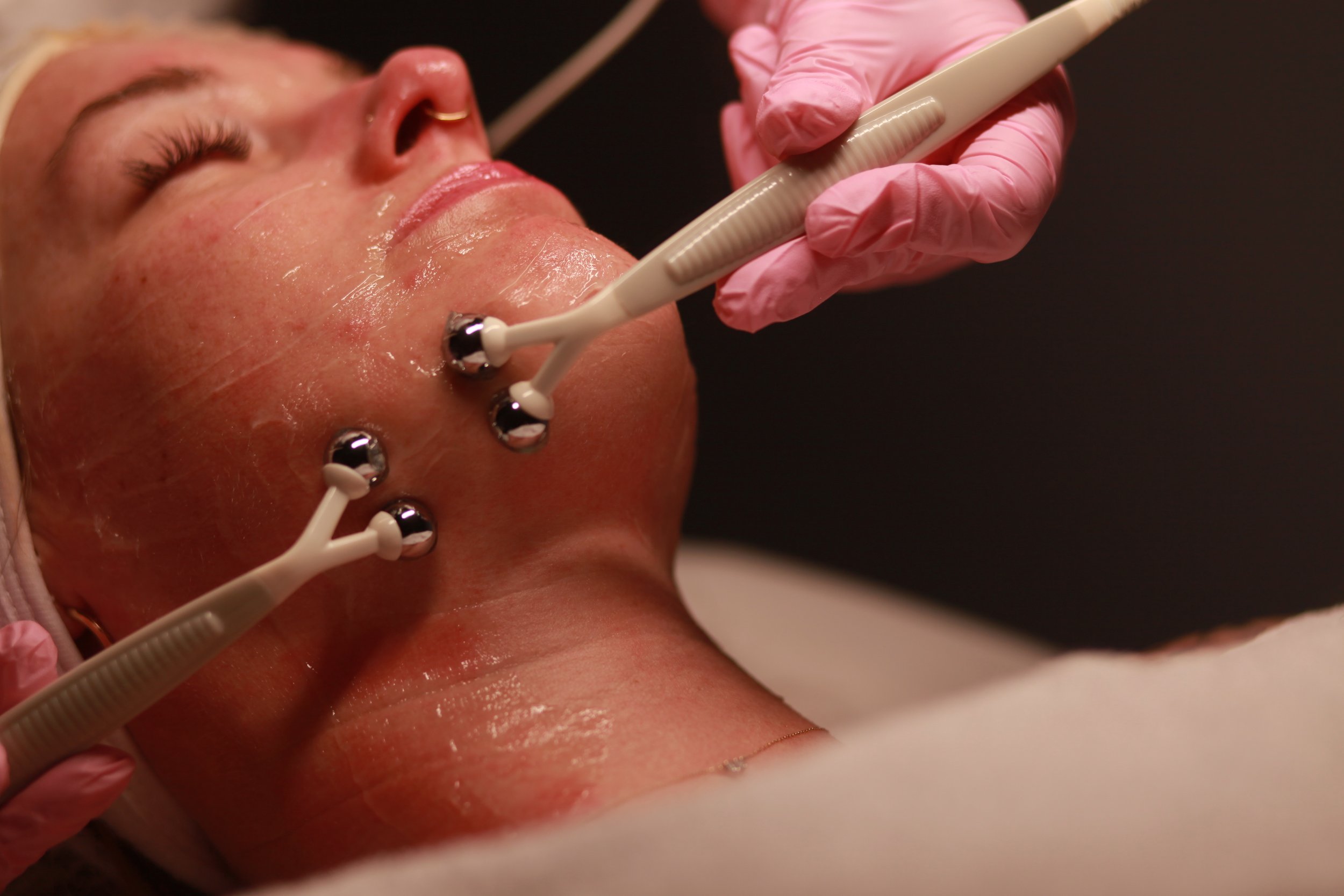
Microcurrent is one of the most effective non-invasive treatments for clients who want their face to look lifted, refreshed, and more sculpted without injections, heat, peeling, or downtime.
It is often described as a “natural facelift,” but a more accurate way to explain it is this: microcurrent helps improve the way the skin, muscles, and lymphatic system function together. When the facial tissues are stimulated gently and consistently, the face can look more toned, less puffy, and more awake.
What Is Microcurrent?
Microcurrent is a low-level electrical current used in professional facial treatments. The current is extremely gentle and is measured in microamps, which is why most clients feel only a light tingling sensation, mild muscle movement, or occasionally a subtle metallic taste during the treatment.
Unlike treatments that create controlled injury to the skin, microcurrent does not rely on heat or trauma. It works by using soft electrical stimulation to support muscle tone, circulation, lymphatic movement, and cellular activity.
How Microcurrent Works on the Face
The face is not just skin. Under the skin, there is a complex structure of facial muscles, connective tissue, fluid movement, and circulation. As we age, experience stress, retain fluid, or lose tone, the face can start to look heavier, softer, or more tired.
Microcurrent helps address several of these concerns at once.
1. It Supports Facial Muscle Tone
Facial muscles play a major role in how lifted or tired the face looks. When muscle tone decreases, the cheeks can appear lower, the jawline can look softer, and the overall face can lose definition.
Microcurrent gently stimulates the facial muscles and helps improve their tone. Visually, this can create:
a more defined jawline;
a more lifted cheek area;
a fresher, more rested appearance;
a subtle lifting effect around the eyes and brows;
a more sculpted facial contour.
The result is natural-looking. Microcurrent does not change the face or add volume. It helps the face look more awake, toned, and balanced.
2. It Helps Reduce Puffiness
One of the most visible benefits of microcurrent is its effect on puffiness. Many clients do not realize that a “tired” or “heavy” face is often connected to fluid retention and slow lymphatic movement.
Microcurrent can support lymphatic drainage, which helps the face look less swollen and more refined.
This is especially noticeable in areas like:
under the eyes;
cheeks;
lower face;
jawline;
chin;
neck.
For clients who wake up puffy, feel heavy in the lower face, or want sharper facial definition before an event, microcurrent can be an excellent choice.
3. It Supports Cellular Energy
In professional skincare, microcurrent is often associated with ATP — adenosine triphosphate, the energy molecule used by cells. ATP is involved in normal cellular repair, regeneration, and protein synthesis.
By gently stimulating the tissue, microcurrent may help support healthier cellular activity. In practical terms, clients often notice that the skin looks:
fresher;
smoother;
more hydrated;
more radiant;
less fatigued.
This is why microcurrent is not only a lifting treatment. It is also a skin-quality treatment.
What Results Can You Expect?
After one microcurrent facial, many clients notice an immediate improvement. The face can look more lifted, less puffy, and more refreshed.
Common immediate results include:
softer puffiness;
a more defined facial contour;
a fresher complexion;
a subtle lifted look;
a more rested appearance.
The best results come from a series of treatments. Microcurrent has a cumulative effect, meaning the tissue responds better with consistency. With regular treatments, the face can hold tone and definition longer.
How Often Should You Get Microcurrent?
For best results, microcurrent is usually recommended as a course.
A typical professional schedule:
Initial series: 1–2 times per week;
Course length: 6–12 treatments;
Maintenance: every 3–6 weeks.
For clients who want microcurrent before a special event, one treatment can still be helpful. For deeper and longer-lasting results, a series is the better option.
Who Is a Good Candidate for Microcurrent?
Microcurrent is ideal for clients who want a natural, non-invasive approach to facial rejuvenation.
It is especially helpful for:
tired-looking skin;
mild loss of firmness;
puffiness;
softening of the jawline;
early signs of aging;
dull complexion;
facial tension;
lack of definition;
clients who want lifting without downtime.
It is also a good option for people who prefer gentle treatments and do not want aggressive resurfacing, needles, or heat-based procedures.
When Microcurrent Has Limitations
Microcurrent can improve tone, puffiness, and facial definition, but it has realistic limits. It will not remove a significant amount of excess skin, replace a surgical facelift, dissolve fat, or fill deep volume loss.
It works best when the concern is related to:
muscle tone;
puffiness;
skin fatigue;
mild laxity;
early aging changes.
For more advanced skin laxity, deep wrinkles, or major structural changes, microcurrent may still be useful as a supportive treatment, but it should be part of a broader treatment plan.
Contraindications: Who Should Avoid Microcurrent?
Microcurrent is gentle, but it is still an electrical treatment. It is not appropriate for everyone.
Microcurrent is generally not recommended for clients with:
pacemaker;
implanted defibrillator;
electronic implants;
epilepsy or seizure disorders;
pregnancy;
active cancer;
thrombosis or phlebitis;
serious heart conditions;
active skin infection;
open wounds or broken skin in the treatment area;
recent surgery in the area unless cleared by a physician.
Extra caution is also needed after Botox, fillers, lasers, chemical peels, microneedling, or other advanced treatments. In those cases, timing matters, and the skin should be fully recovered before microcurrent is performed.
Microcurrent After Botox or Fillers
Microcurrent should usually be avoided immediately after injectable treatments.
After Botox, it is best to wait approximately 10–14 days before receiving microcurrent. After fillers, many clients should wait around 2–4 weeks, depending on the area treated and the level of swelling or sensitivity.
The goal is to allow the injectable treatment to settle properly before adding stimulation, massage, or lymphatic work.
What Does the Treatment Feel Like?
Most clients find microcurrent comfortable. You may feel:
light tingling;
gentle muscle movement;
mild pulsing;
a metallic taste in the mouth during certain areas;
a lifted or “worked out” feeling afterward.
There should not be sharp pain, burning, or strong discomfort during the treatment.
Final Thought
Microcurrent is best understood as a smart, restorative facial treatment. It does not force the skin into a dramatic change. It works with the natural structure of the face by supporting muscle tone, lymphatic flow, circulation, and cellular energy.
For the right client, microcurrent can make the face look fresher, lighter, more lifted, and more defined — with no downtime and a very natural result.
